The barrier is the part that decides whether everything else works. It is what holds the seal, what protects the skin, and what fails first when something is wrong — so it is worth understanding before anything else in the system.
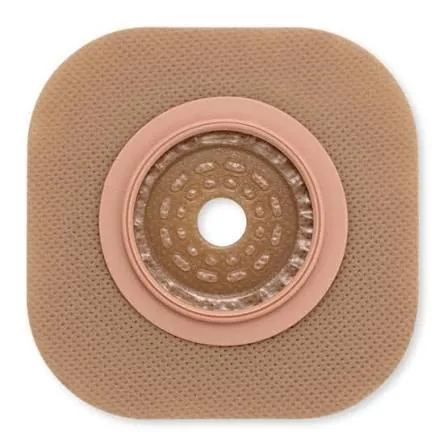
A flat barrier is the starting point and suits most people: it works when the stoma protrudes slightly above the skin and the area around it is reasonably even. Hollister's flat FlexWear base comes in 45, 55 and 70 mm; HDL-Hendry's hydrocolloid base comes in 50, 60 and 70 mm with a printed 5–70 mm cutting guide.
A convex barrier has a curved inner surface that presses gently into the skin around the stoma, encouraging a flush or retracted stoma to sit slightly forward. It is a targeted solution, not an upgrade: it is indicated when the stoma sits level with or below the skin, when the skin around it dips, or when a flat barrier plus a barrier ring is still leaking. Because it works by pressure, it is not right for every stoma and should be discussed with your stoma nurse before switching.
Between those two sits the most useful intermediate step, which many people skip: a barrier ring or paste under a flat barrier. If a flat wafer is leaking because the skin has a scar, a crease or a dip, filling that gap often solves the problem without changing the system at all.
Bases from both ranges, plus the rings, paste and protective wipes that go under and around them.
FlexWear cut-to-fit base, 45 / 55 / 70 mm
View product →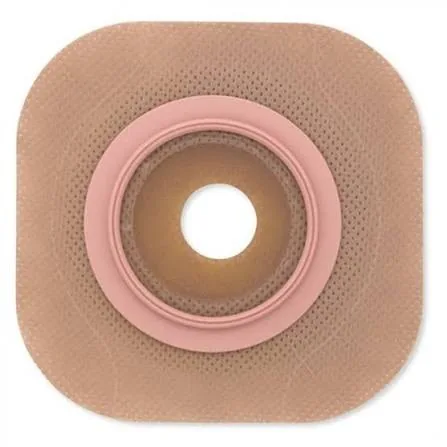
Convex FlexWear base, 55 mm
View product →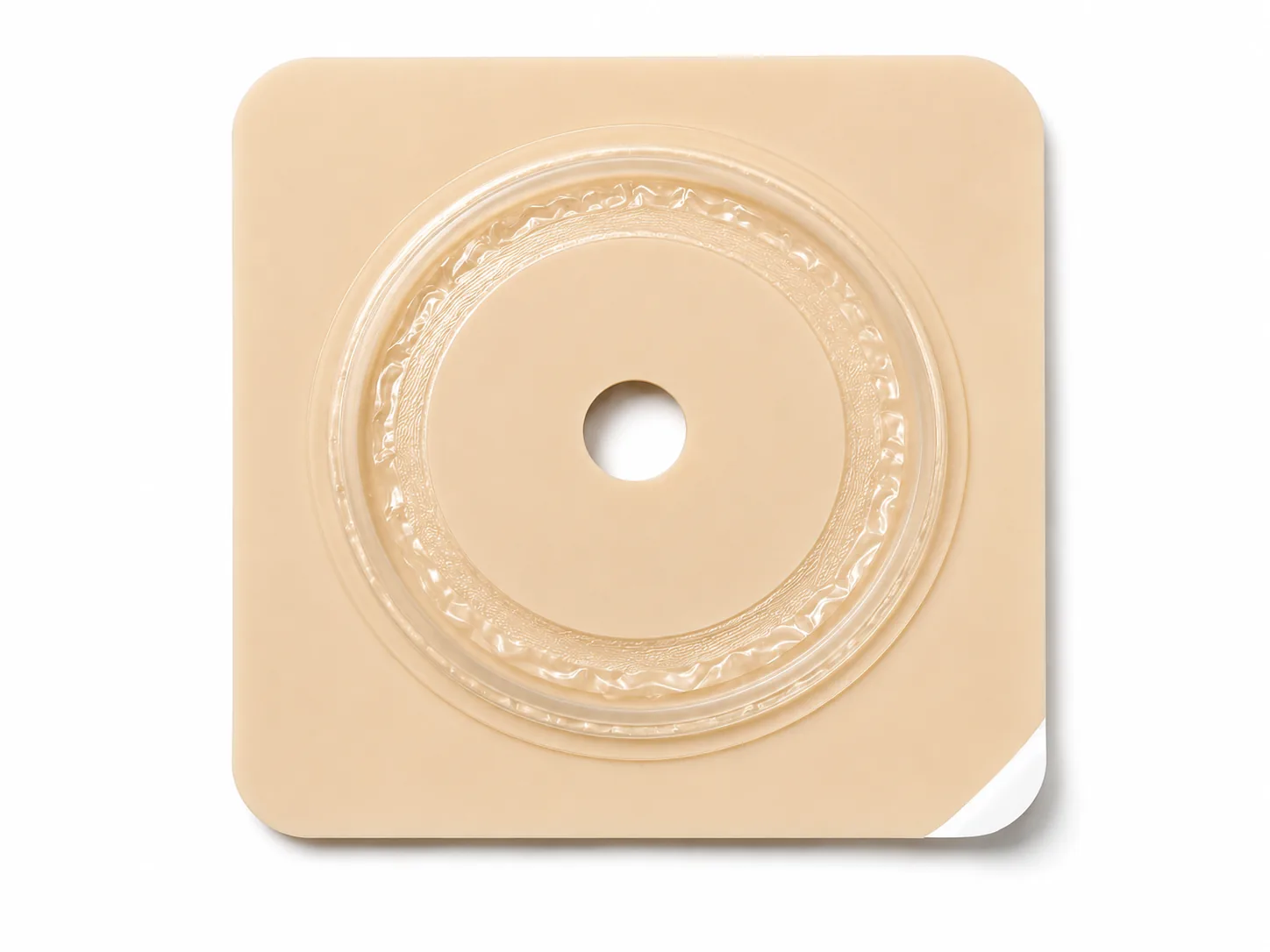
Cut-to-fit base, 50 / 60 / 70 mm
View product →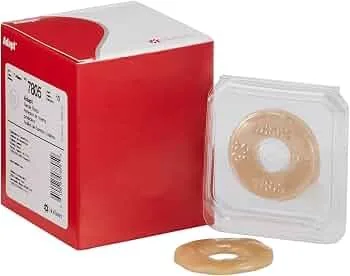
Mouldable seal for uneven skin — 7805
View product →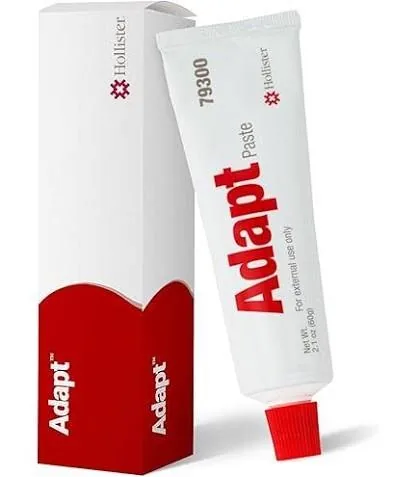
Fills dips and creases — 79300
View product →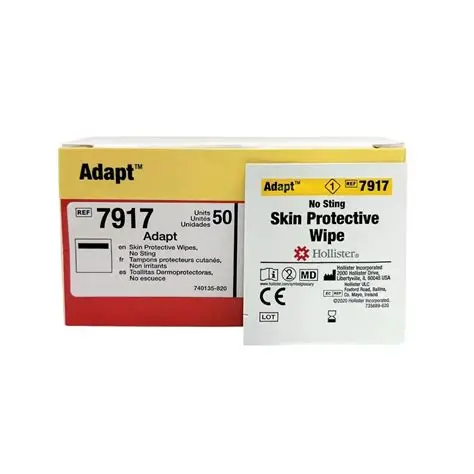
No-sting barrier film — 7917
View product →Cut the opening about 2 mm larger than the stoma at its widest point. Too large exposes skin to output; too tight rubs the stoma. In the months after surgery the stoma shrinks, so re-measure every few weeks rather than cutting to the same template.
Warm the barrier between your hands before applying it, put it on clean dry skin, and hold it in place for around thirty seconds. Hydrocolloid bonds with body heat and pressure — this one step makes a real difference to wear time and costs nothing.
Flange size is not stoma size. The 45 / 55 / 70 mm on a Hollister product and the 50 / 60 / 70 mm on an HDL-Hendry product refer to the coupling ring the pouch attaches to, and the two ranges are not interchangeable. If you do not know which you have, send us a photo of the box on WhatsApp.
A flat barrier sits flat against the skin and suits a stoma that protrudes on even skin. A convex barrier has a curved inner surface that presses into the skin around the stoma, which can help a flush or retracted stoma seal properly.
About 2 mm larger than the stoma at its widest point. Re-measure in the months after surgery, because the stoma shrinks.
It varies with output, skin and activity, and is usually a few days. Change it when you feel itching or burning underneath rather than waiting for a visible leak.
Order directly from StomaCare Lebanon by WhatsApp or phone. We deliver across Lebanon and can coordinate shipping outside Lebanon.
If you are not sure of the reference or the flange size, send a photo of your current box on WhatsApp and we will identify it for you.
Fanar, Main Road, Kikano Building, Ground Floor, Lebanon · info@stomacarelb.com